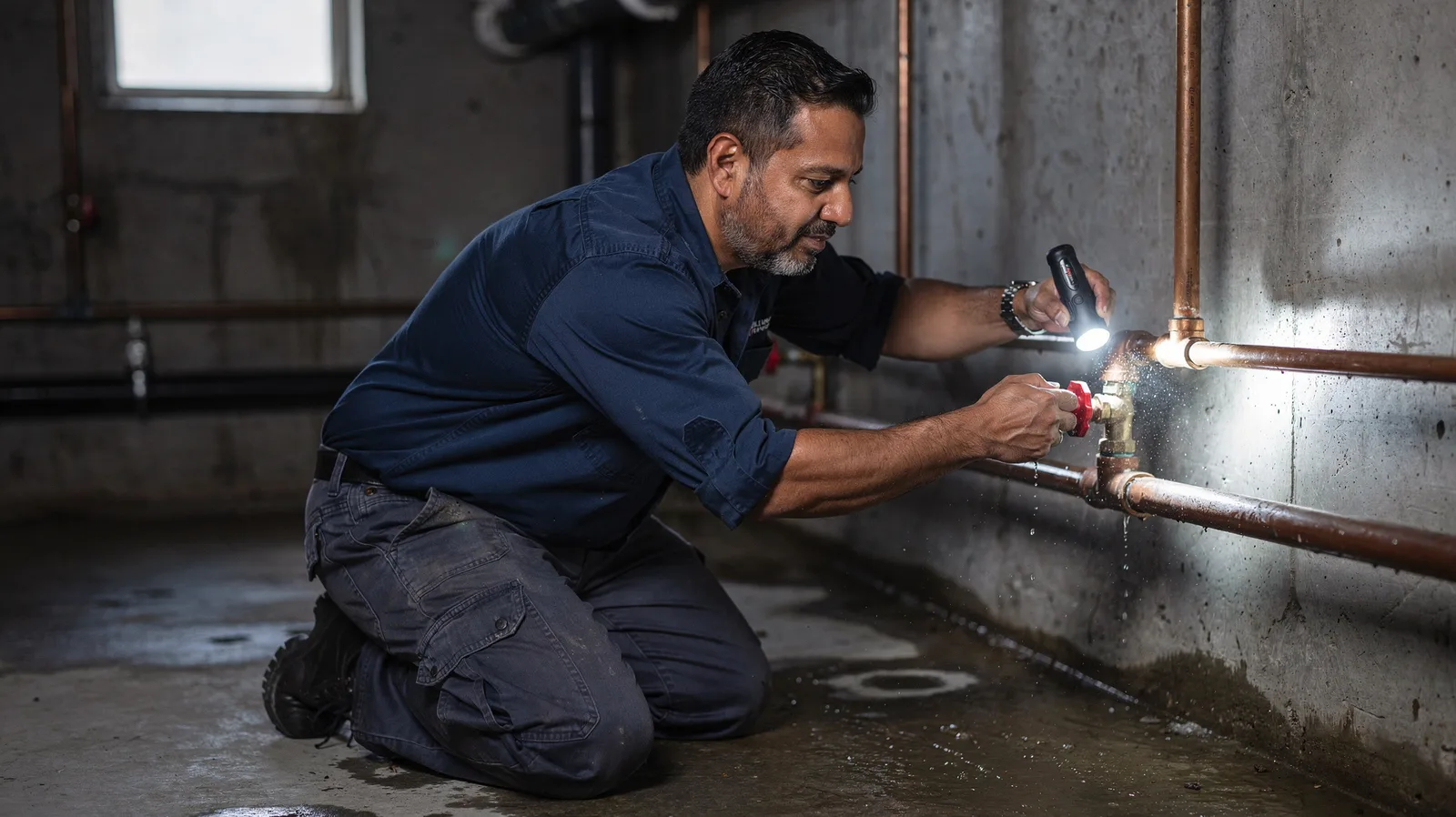
One slow sink is a local clog. Several drains acting up at once, especially the lowest ones, usually means the main drain under the house or in the yard is blocked. The difference matters, because pouring chemicals or plunging upstairs does nothing for a main-line clog and can send wastewater into the basement.
Signs it is the main line
- Water rises in the shower or floor drain when you flush or run the washer.
- Toilets gurgle when a sink drains.
- Sewage odor near the basement floor drain or the cleanout.
- The yard cleanout cap is wet or has water standing under it.
Hold things steady
Stop using water and turn off appliances that drain on a timer. If water is already standing at a floor drain, keep people off it and do not try to clear it by hand.
How the clog is cleared
The plumber opens the cleanout closest to the street and runs a sectional cable machine with a cutting head through the line. Roots, grease and wipes are the usual culprits. For heavy grease or root masses, a hydro-jetter scours the pipe wall with high-pressure water.
A camera inspection after clearing is worth asking about. It shows whether the clog was a one-time blockage or a symptom: a cracked clay joint letting roots in, a belly where the pipe has sunk, or an offset that catches waste. Main lines in older Applegate, MI neighborhoods are often clay or cast iron, and knowing their condition helps you plan a repair before the next backup.